
Free Palestine: Architecture of Resistance
Discussion, Pogovor / 15. 5. 2026 / 18:00

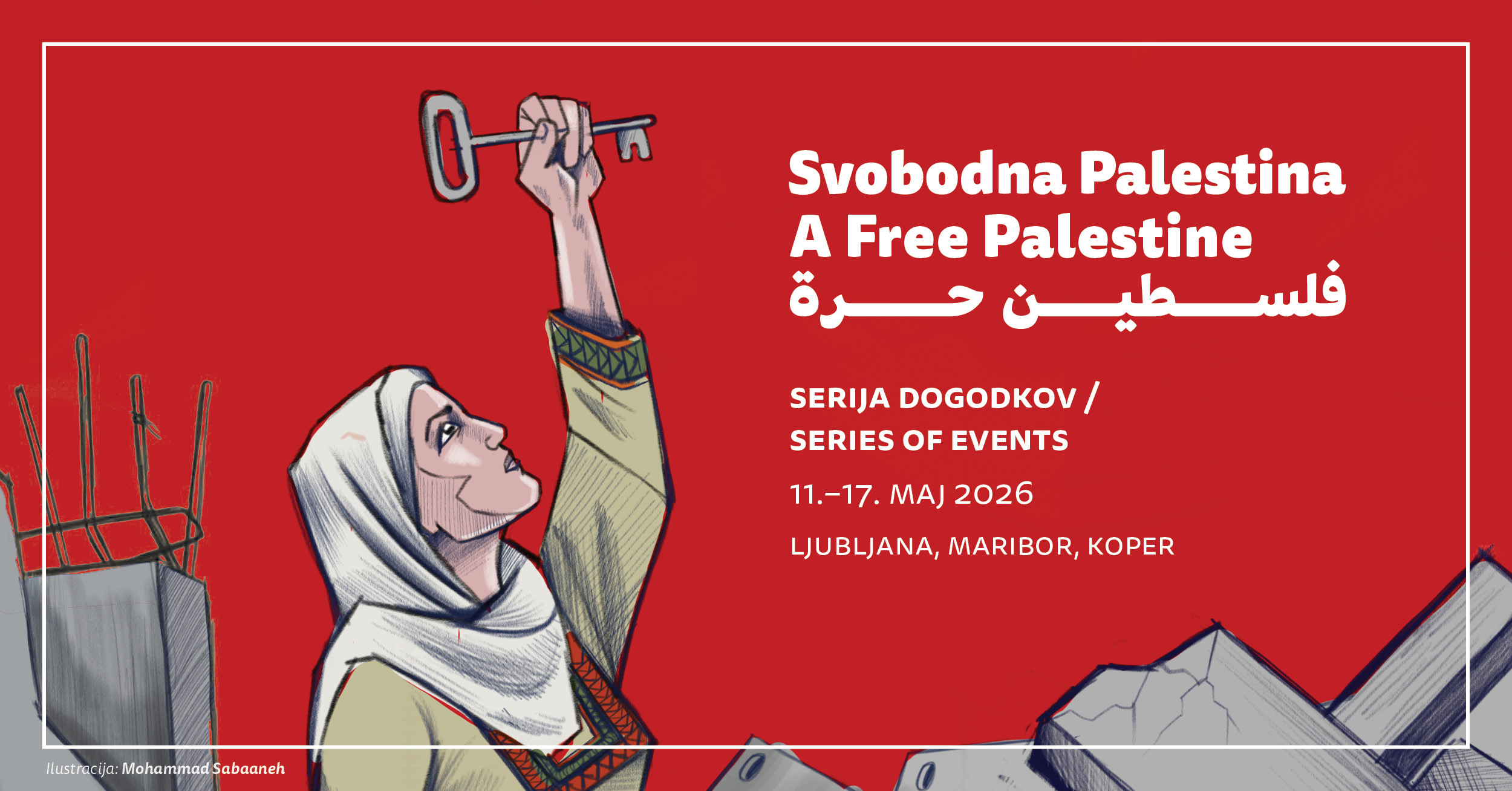
Free Palestine: Architecture of Resistance
Discussion, Pogovor / 15. 5. 2026 / 18:00
As Gaza remains in the grip of a severe humanitarian crisis and faces unprecedented destruction of its cultural and natural heritage, violence against the Palestinians continues to escalate along with the expansion of illegal settlements in the West Bank. The destruction of entire neighbourhoods, agricultural landscapes, public infrastructure and heritage is threatening to erase their communities, historical memory and centuries-old traditions.
The international public has seen increasingly heated debates emerging regarding the future and reconstruction of Gaza, including ideas of turning Gaza into a tourist backdrop or a luxury resort. Such proposals disregard the needs and rights of the local population and undermine the chances for a sustainable and just reconstruction rooted in the practices and collective efforts of the local communities.
In collaboration with Gibanje za pravice Palestincev (Movement for the Rights of Palestinians) and the Faculty of Humanities of the University of Primorska, the Museum of Architecture is going to host a conversation with Palestinian-British architect Antoine Raffoul. Our focus will be on the future of Gaza, the role of space, architecture and heritage during and after the war, the role of international institutions and the need for their more active engagement in the protection and reconstruction of Gaza. Raffoul insists that any reconstruction process should bear in mind the local community and its understanding of space and history, as well as its future aspirations.
Our point of departure will be Raffoul’s vision for the reconstruction of Gaza, inspired by the understanding of Palestine as a space for everyone wishing to live in peace and his decades-long efforts for the reconstruction of Lifta, a village situated at the western entrance to Jerusalem. Still facing demolition, Lifta was added to the UNESCO tentative list in 2015, owing also to the efforts of Israeli architectural organisations, and included on the World Monuments Fund’s 2018 World Monuments Watch List three years later. The event features screening of Antoine Raffoul’s short animated film portrait of pre-1948 Lifta, which uses modern technologies to visualize life in the village as it could be.
The conversation aims to open up space for a broader discussion on the ways in which the rebuilding of Gaza can unfold not as just a technical matter, but a process that integrates social, cultural and historic dimensions of the space.
The conversation will be in English, and will be moderated by Dr. Neža Čebron Lipovec, Asst. Prof. at the Faculty of Humanities, UP.
The event is part of the Free Palestine programme, a series of events organized by Movement for the Rights of Palestinians and Divja Misel institute and partners to mark the anniversary of the Nakba. It is open to everyone interested in learning more and participating in the discussion.
—
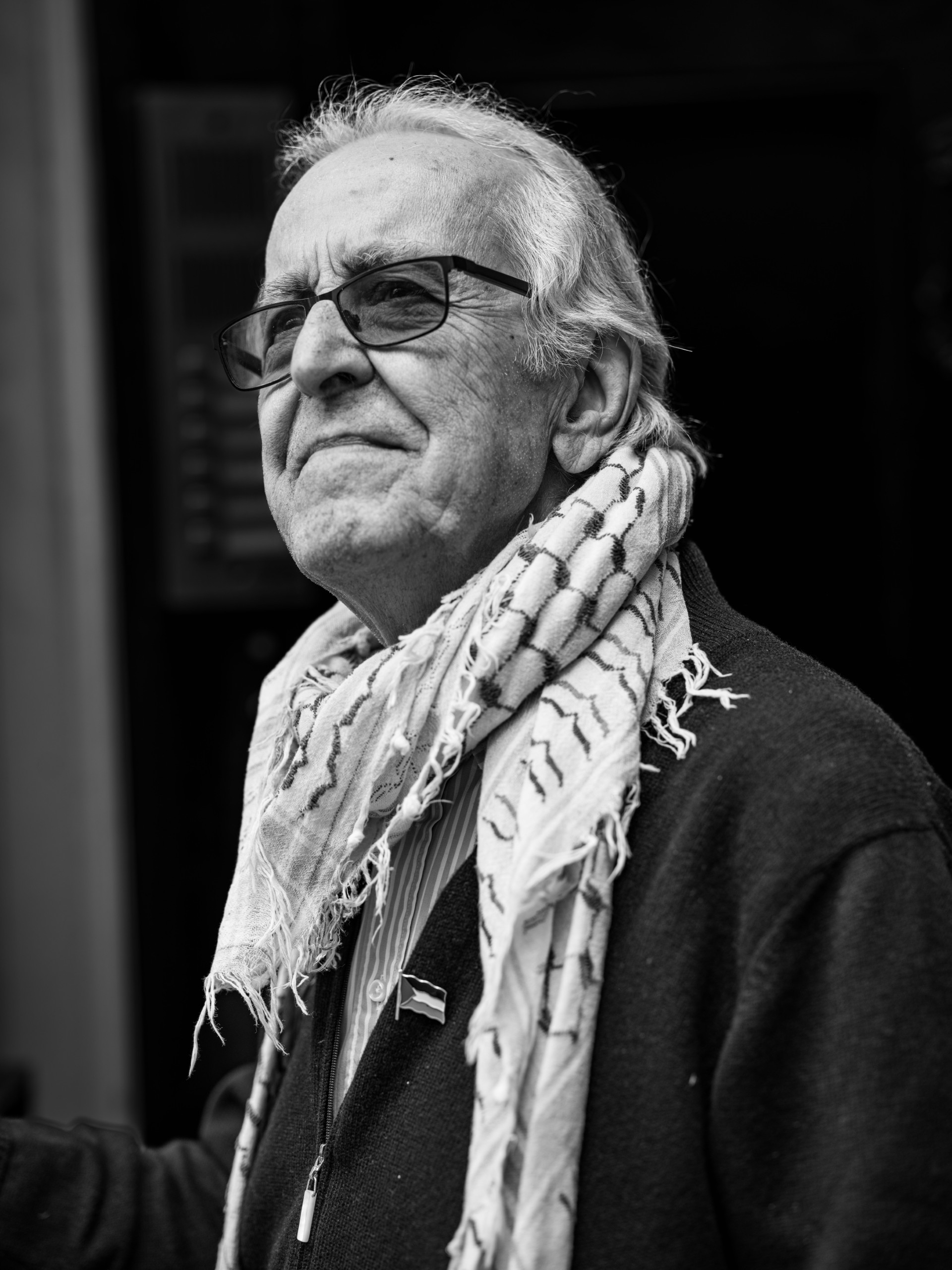
Antoine Raffoul is a Palestinian British architect, born in 1941 in Nazareth, Palestine. In 1948, he was expelled together with ten members of his family from their home in Haifa, Palestine, by Zionist underground forces. The family then temporarily settled in Lebanon, from where they were never able to return, as the borders were soon closed. Their home in Haifa was demolished in the early 1970s.
He received his architectural degree from the University of Illinois, USA (1968), after which he began his career in New York City at Victor Gruen Associates under the auspices of the then young Cesar Pelli. In 1971, he moved to London, where he worked at Ahrends, Burton and Koralek, and later established his own private architectural practice, which he ran for more than 28 years.
During this time, he launched a campaign against the “architecture of erasure” in Palestine and called for the expulsion, from their professional institutions, of architects involved in the design and construction of illegal Jewish settlements in Historic Palestine in violation of International Law. He is a Chartered Member of The Royal Institute of British Architects (RIBA), London, and a member of ICOMOS (International Council on Monuments and Sites), CIAV (International Committee on Vernacular Architecture), and a Fellow of The Royal Geographical Society (RGS), London.
In his work, he combines architecture, the study of vernacular traditions, and political engagement. He focuses in particular on issues of cultural heritage, the Right of Return, and the so-called “architecture of erasure” in Palestine.
In 2007, he initiated efforts to preserve the deserted Palestinian village of Lifta, west of Jerusalem, which was later placed on UNESCO’s Tentative List and on the World Monuments Fund List. He is also the Founder of the platform “1948 Lest We Forget” and co-founder of the international “Architectural Competition for the Rebuilding of Destroyed Palestinian Villages.”
He is actively involved in current initiatives for the rebuilding of Gaza, advocating approaches based on the inclusion of local communities and principles of spatial justice. He lectures and publishes in the fields of architecture, politics, and cultural heritage, and is currently preparing a book about his travels through Andalucia, Morocco, and the Algerian Sahara.