

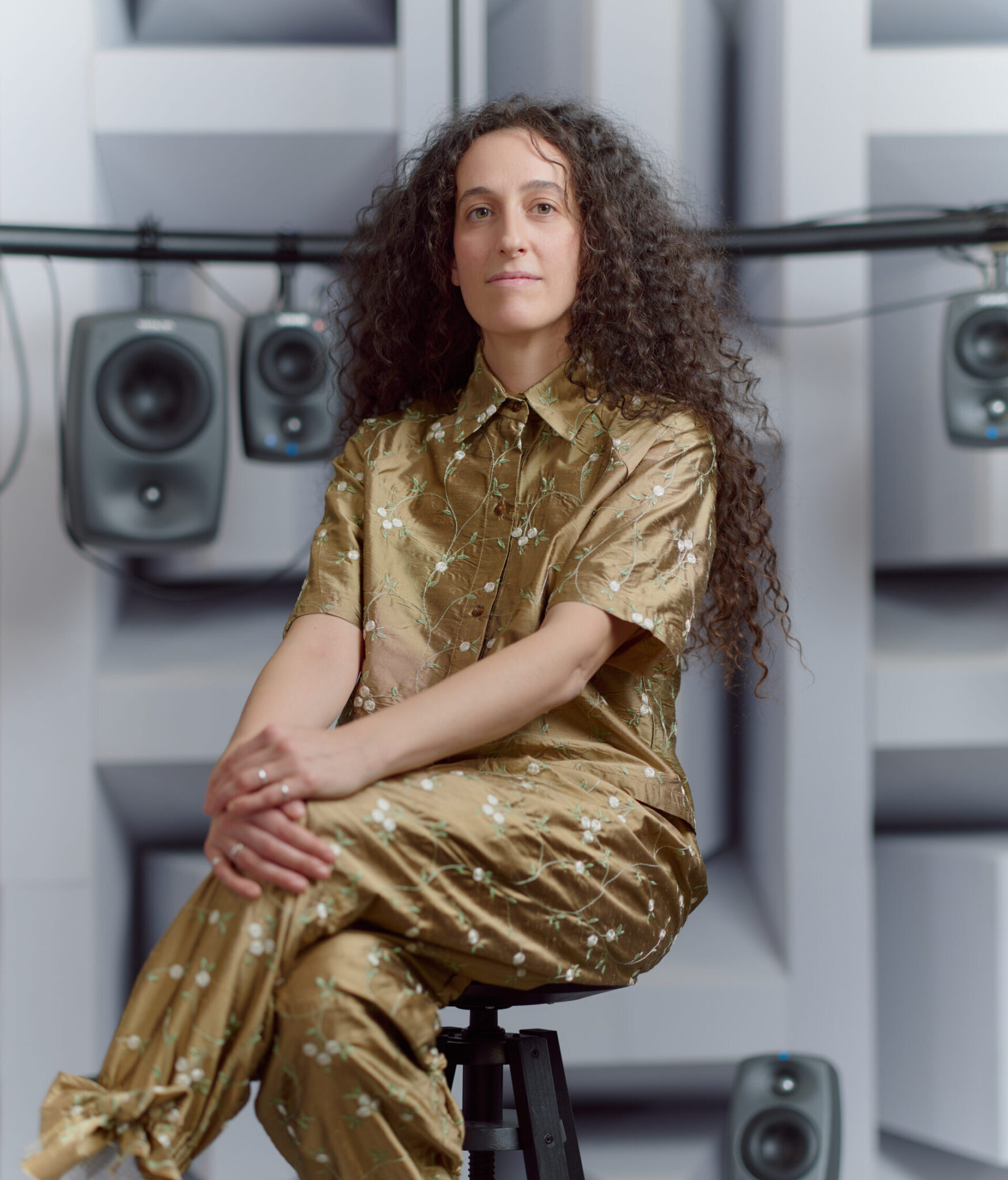
The Museum of Architecture and Design (MAO) in Ljubljana is pleased to announce Martina Muzi as the curator of the 29th Biennial of Design (BIO 29). Organised by MAO in collaboration with the Centre for Creativity (CzK), the biennial will open in November 2026 and run through to April 2027, continuing BIO’s longstanding exploration of design’s role in contemporary society.
Titled Soft Fields, BIO 29 examines how knowledge enclosed within research and industrial environments can be opened, redirected, and redistributed through design practice. Soft Fields extends its conceptual framework by examining how these circulations shape our environments and institutions, and how their obstructions, asymmetries and openings become sites of intervention. It approaches design not as a solutionist gesture but as a situated practice capable of engaging with these frictions and redistributions.
Transfer of knowledge is never only mechanical—it is relational. Each handoff carries responsibility, tacit knowledge, and a redistribution of control. As knowledge transfer becomes increasingly organised around data capture and compliance, and as decision-making shifts from human judgment to software systems, Soft Fields asks: What becomes formalised, and what resists metrics? Which forms of intelligence remain undervalued? How might design sustain the informal, the situated, the hard-to-classify?
BIO 29 frames the exhibition as a working ground, at once part research platform and part production site. It envisions a process of creating temporary openings for designers to enter institutional agendas and engage their practices with real world contexts. Grounded in embedded research within laboratories, institutions, factories and researchers across Slovenia and their global chains, the biennial investigates how technical infrastructures and institutional habits regulate access to knowledge—and how design might reroute, reframe or reopen these flows. With an approach where soft is a mode for moving across disciplines, technologies, bodies and places, the biennial unfolds as a network of entry points, where asymmetrical voices and agents evolving at different paces, and overlooked systems of production use design to transmit, translate and transform.
Martina Muzi is a designer, curator and educator who engages critically with design’s material logistics, geopolitical cultures, and social formations – from family to factory, atelier to school. She leads the Studio Technogeographies BA programme at Design Academy Eindhoven, where she also curated the GEO-DESIGN exhibition platform. She is currently curator at FABER of the Design Signals, a program investigating the relation between local industries and design practices. Her collaborative work has been presented at the Venice Architecture Biennale, Vitra Design Museum, Istanbul Biennial, MAAT Museum, and M+ Museum of Visual Culture, among others. Known for a curatorial practice that creates the conditions for design to build relationships across disciplines, she approaches exhibition-making not as a site of display, but as a temporary infrastructure for exchange, translation and circulation – activating across exhibition, fieldwork, pedagogy, and public programme.
“We’re delighted to welcome Martina Muzi as BIO’s new curator. With her deep experience in international projects rooted in local urgencies, we’re excited to collaborate closely with her on shaping a biennial that is ambitious, collaborative, and truly meaningful,” says Maja Vardjan, Director of MAO.
“This year’s design biennial will enable the exceptional knowledge developed behind closed doors, hidden from public view, to become visible, tangible, readable, recognisable, and usable. We will use it on the biennial’s shared platform, with the intention that the collaborations formed through this process will outlast the biennial,” notes Maša Ogrin, the Head of BIO.
About BIO
Founded in 1963, the Biennial of Design (BIO) is one of the world’s longest-running design biennials. Over time, it has evolved from a showcase of industrial design into a platform for research-driven and socially-engaged practices. Today, BIO functions as a testing ground where design operates across disciplines, engaging with systems, modes of production, services, and scientific research. BIO is organised by the Museum of Architecture and Design (MAO) in cooperation with the Centre for Creativity (CzK).
Further details about the curatorial framework and the Open Call for BIO 29 will be announced in the first week of February 2026.
About CzK
The Centre for Creativity (CzK) is Slovenia’s first national business development accelerator for professionals working in the creative and cultural sectors. The platform is run by the Museum of Architecture and Design, and together with open calls of the Ministry of Culture it forms the support framework for the development of the creative sector in Slovenia. The Centre’s programmes are aimed at strengthening the social and economic value of the sector while forging stronger ties with other sectors and the economy in general. More at czk.si.
Follow Us
Website: bio.si
Instagram: @bio_ljubljana

The Design Biennial is organised by the Museum of Architecture and Design (MAO) in cooperation with the Centre for Creativity. The project is co-financed by the European Union and the Republic of Slovenia.
